
Transform your arms with our comprehensive guide to effective arm workouts. Whether you're a beginner or advanced fitness enthusiast, discover proven exercises and training strategies to build impressive biceps, powerful triceps, and strong forearms using various equipment options and bodyweight movements.
Before diving into workouts, understanding your arm muscles helps optimize your training. Your arms consist of three primary muscle groups: the biceps (front of upper arm), triceps (back of upper arm), and forearms. The triceps actually make up about two-thirds of your upper arm mass, making them crucial for overall arm size and strength.
Effective arm training requires targeting all these muscle groups through various movement patterns: pulling exercises for biceps, pushing movements for triceps, and grip-focused exercises for forearms. This balanced approach ensures proportional development and reduces injury risk.
New to arm training? Start with this foundational routine using light weights or household items. Perform 2-3 sets of 8-12 repetitions, focusing on proper form over heavy weight. Rest 60-90 seconds between sets.
The Complete Beginner Circuit:
• Push-ups: Build triceps, chest, and shoulders while improving core stability
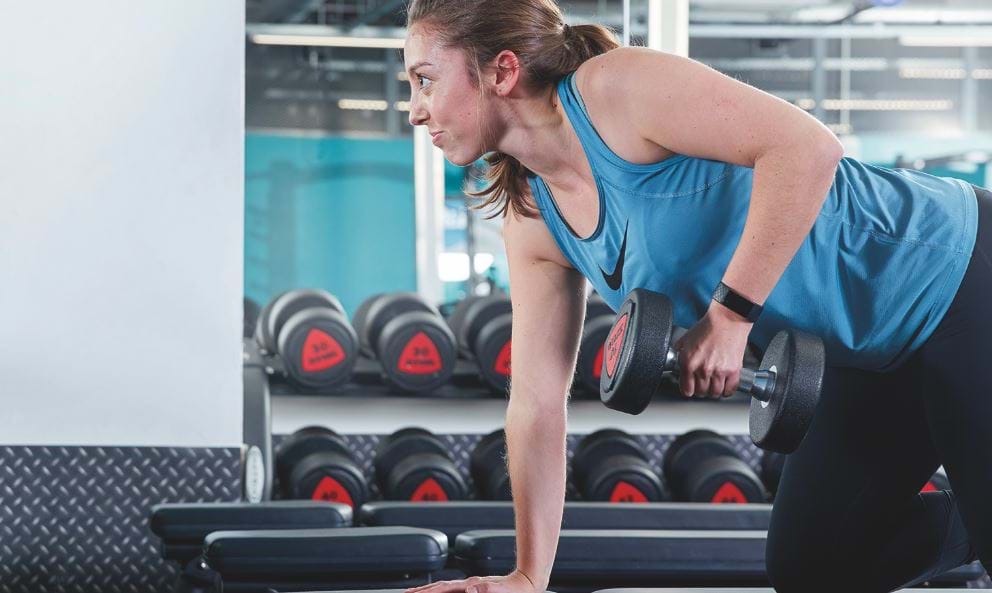
• Bent-over rows: Target biceps and back muscles for balanced upper body strength
• Bicep curls: Isolate and strengthen the front arm muscles
• Overhead press: Develop shoulder and tricep strength
• Tricep dips: Focus on the back of your arms using a chair or bench
Progress by gradually increasing repetitions or adding light weights as you build strength and confidence.
No equipment? No problem! This boxing-inspired circuit delivers incredible results using only your body weight. Perform each exercise for 45 seconds with 15 seconds rest, completing 3-4 rounds total.
Dynamic Boxing Circuit:
• Power Uppercuts: Explosive upward punches that engage biceps, shoulders, and core. Keep your stance wide, knees soft, and rotate through your torso for maximum power transfer.
• Straight Jabs: Forward punches targeting shoulders, triceps, and chest. Maintain a staggered stance, keep elbows tucked, and drive power from your legs through your arms.
• Hook Combinations: Circular punching motions that work shoulders and obliques. Focus on hip rotation and keeping your elbow parallel to the ground at shoulder height.
• Jab-Cross Sequences: Combination movements that integrate core rotation with arm strength. Alternate between straight punches and hooks for comprehensive muscle activation.
This high-intensity approach burns calories while building functional arm strength and improving cardiovascular fitness.
Ready to take your arm training to the next level? This advanced dumbbell routine focuses on progressive overload and muscle isolation. Choose weights that challenge you in the 6-10 rep range for strength or 12-15 reps for muscle endurance.
Power-Building Dumbbell Sequence:
• Alternating Bicep Curls: 3 sets of 10-12 reps per arm, focusing on controlled eccentric (lowering) phase
• Overhead Tricep Extensions: 3 sets of 8-10 reps, keeping elbows stationary and close to your head
• Hammer Curls: 3 sets of 12-15 reps, targeting the brachialis muscle for arm thickness
• Tricep Kickbacks: 3 sets of 10-12 reps, maintaining a strong bent-over position
• 21s Bicep Protocol: 7 partial reps (bottom half), 7 partial reps (top half), 7 full reps for intense muscle stimulation
Rest 2-3 minutes between exercises to maintain strength and power output throughout your workout.
Master these bodyweight progressions to build serious arm strength without any equipment. Each exercise offers multiple difficulty levels to match your current fitness level.
Progressive Bodyweight Movements:
• Push-up Variations: Start with wall push-ups, progress to knee push-ups, then standard push-ups, and advance to diamond push-ups for increased tricep activation
• Plank Progressions: Begin with forearm planks (30-60 seconds), advance to straight-arm planks, then single-arm planks for unilateral strength
• Pike Push-ups: Target shoulders and upper chest by placing feet elevated and pushing up at an angle
• Tricep Dip Variations: Use a chair for assisted dips, progress to full dips, then elevate feet for increased difficulty
• Isometric Holds: Add static holds at challenging positions to build strength and muscular endurance
Focus on perfect form and gradual progression rather than rushing to advanced variations.
Creating an effective home arm workout doesn't require expensive equipment. Here are smart, budget-friendly alternatives that deliver professional results:
Equipment Substitutions:
• Resistance Bands: Provide variable resistance and take up minimal space. Choose bands with different resistance levels for progressive training
• Household Items: Water jugs, paint cans, or backpacks filled with books can substitute for dumbbells
• Suspension Trainers: Versatile tools that use body weight for resistance training
• Adjustable Dumbbells: Space-efficient option that grows with your strength
Maximizing Small Spaces: Focus on exercises that require minimal room like arm circles, isometric holds, and resistance band movements. Vertical space is often more available than floor space, making overhead movements ideal for apartment workouts.
Effective arm development requires strategic programming that balances volume, intensity, and recovery. Here's how to structure your training for optimal results:
Weekly Training Structure:
• Frequency: Train arms 2-3 times per week with at least 48 hours between sessions
• Volume: Beginners: 6-8 sets per week; Intermediate: 10-14 sets; Advanced: 16-20 sets
• Progression: Increase weight, reps, or sets by 2.5-5% weekly when you can complete all sets with perfect form
Recovery and Nutrition: Adequate protein intake (0.8-1g per pound of body weight) and 7-9 hours of sleep are crucial for muscle growth and strength gains. Don't neglect rest days – your muscles grow during recovery, not just during workouts.
